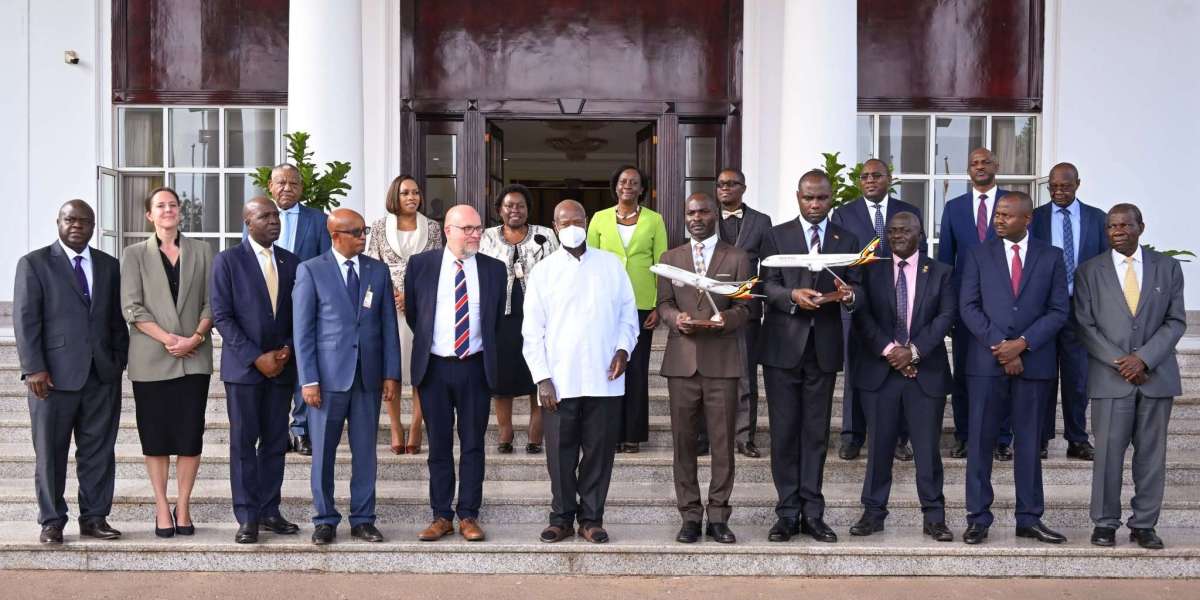
Uganda has taken a major step toward transforming its aviation sector after Uganda Airlines signed a landmark aircraft acquisition agreement with American aerospace giant Boeing for the purchase of 10 new aircraft. The deal, witnessed by President Yoweri Museveni on June 10, 2026, is expected to significantly expand the national carrier's fleet, strengthen regional and international connectivity, and position Uganda as a strategic aviation hub in East and Central Africa.
The agreement, estimated to be worth approximately Shs3.7 trillion (about $985 million), marks one of the largest aviation investments in Uganda's recent history. The acquisition includes both passenger and cargo aircraft, reflecting Uganda Airlines' long-term strategy of expanding passenger services while simultaneously developing a dedicated air freight business.
A Strategic Investment in Uganda's Future
The signing ceremony brought together senior government officials, Uganda Airlines executives, and Boeing representatives. The agreement was signed by Uganda Airlines Chief Executive Officer Girma Wake and Boeing's senior commercial leadership, underscoring the strategic partnership between the national carrier and one of the world's leading aircraft manufacturers.
Government officials view the investment as more than an airline expansion project. It is part of a broader national strategy aimed at boosting trade, tourism, exports, and foreign investment.
According to official statements, the expanded fleet will enable Uganda Airlines to increase route frequencies, launch new destinations, improve cargo capacity, and support the country's economic growth agenda. The government believes a stronger national airline can play a critical role in attracting tourists, facilitating business travel, and opening new export markets for Ugandan products.
What Aircraft Will Uganda Airlines Acquire?
While the full aircraft delivery schedule has not yet been publicly released, previous government disclosures indicated that the airline planned to acquire a mix of wide-body passenger aircraft, narrow-body regional jets, and cargo freighters. Earlier planning documents suggested the acquisition would include four Boeing 787 Dreamliners for long-haul operations and two converted Boeing freighters dedicated to cargo services. Industry reports indicate that Uganda Airlines is expected to add,
- Boeing 787 Dreamliners for long-haul international routes.
- Boeing 737 MAX aircraft for medium-haul and regional operations.
- Dedicated cargo aircraft, including Boeing converted freighters, to support Uganda's growing export sector.
The Boeing 787 Dreamliner is widely regarded as one of the most fuel-efficient long-haul aircraft in the world, offering lower operating costs and extended range capabilities. Meanwhile, the Boeing 737 MAX family has become a popular choice for airlines seeking efficient medium-haul operations with lower fuel consumption and reduced emissions.
Building on Recent Fleet Expansion
The Boeing order comes during a period of rapid change for Uganda Airlines.
In recent months, the airline has leased Boeing 737-800 aircraft from Ethiopian Airlines to address capacity constraints and maintain operational reliability across its network. The temporary lease arrangement allowed the airline to continue serving regional routes while preparing for long-term fleet expansion.
The airline's current fleet includes:
- Two Airbus A330-800neo wide-body aircraft.
- Four Bombardier CRJ-900 regional jets.
- One Airbus A320.
- One Boeing 737-800 operating under lease arrangements.
Once all 10 newly ordered aircraft are delivered, Uganda Airlines' fleet could grow to approximately 18 aircraft, making it one of the largest and most capable airline fleets in East Africa outside the region's traditional aviation giants.
Expanding Routes Across Africa, Europe, Asia and Beyond
One of the primary motivations behind the fleet expansion is route growth.
Uganda Airlines has publicly expressed ambitions to expand beyond its current network and strengthen connectivity between Entebbe and major global destinations. Industry analysts believe the additional aircraft could support future routes to Europe, the Middle East, Asia, and potentially North America through strategic partnerships.
The acquisition also aligns with the airline's broader growth strategy, which aims to increase its route network and establish Entebbe International Airport as a regional transit hub connecting East Africa to global markets.
With more aircraft available, Uganda Airlines would have greater flexibility to increase flight frequencies on high-demand routes while simultaneously opening new destinations that are currently commercially difficult to serve.
Economic Impact Beyond Aviation
The benefits of the fleet expansion are expected to extend far beyond the airline industry. A larger national carrier could stimulate:
- Tourism growth through increased international connectivity.
- Job creation in aviation, engineering, hospitality, and logistics.
- Foreign investment by improving accessibility to Uganda.
- Growth in exports through expanded cargo capacity.
- Development of aviation training and maintenance services.
Reports also suggest that Uganda intends to strengthen aviation training infrastructure, including enhancing capabilities at aviation institutions such as Soroti Flying School, creating opportunities for local pilots, engineers, and aviation professionals.
Challenges Ahead
Despite the optimism surrounding the Boeing agreement, significant challenges remain.
Aircraft acquisition and operation require substantial financial investment, while airlines worldwide continue to face rising fuel costs, supply chain disruptions, and aircraft delivery delays. Boeing itself has experienced production constraints affecting delivery timelines for some aircraft models.
Uganda Airlines will also need to continue improving profitability, operational efficiency, and route performance to ensure the long-term sustainability of its expansion plans.
Nevertheless, government officials remain confident that strategic investment in aviation infrastructure will generate long-term economic benefits that outweigh the initial costs.