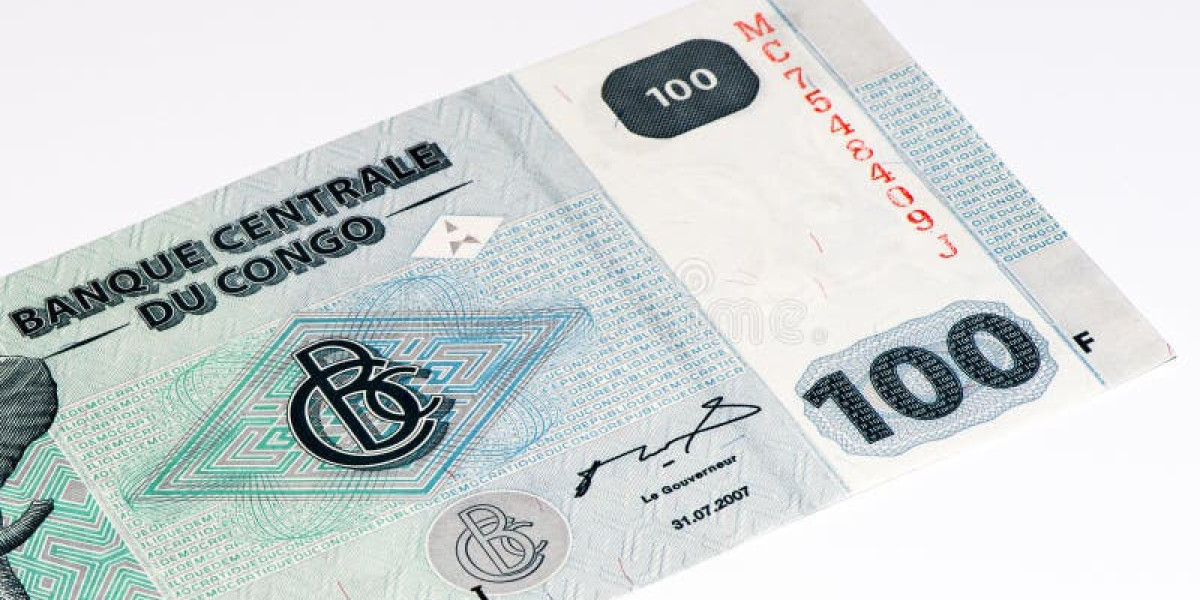
The Central Bank of Congo said individuals and businesses will no longer be allowed to make or receive payments in dollars or other foreign currencies in cash. Commercial banks will also be prohibited from physically importing foreign banknotes.
Foreign currency transactions will only be permitted electronically through the banking system, a move authorities say will improve oversight of money flows.
Governor Andre Wameso said “From April 9, 2027, no person will be authorised to carry out cash transactions in foreign currencies."
The decision targets a deeply entrenched system. Decades of instability and hyper-inflation in the 1990s, when inflation surged to around 2,000 per cent, pushed Congolese households and businesses towards the dollar as a store of value.
Today, the economy remains heavily dollarised, with most transactions above $5 conducted in US currency.
The Congolese franc trades at roughly 2,300 per dollar, compared with about 920 in 2010, reflecting long-term depreciation and weak public confidence.
Previous attempts to reverse this trend have struggled. A 2024 directive forcing electronic payment terminals to accept only francs had limited impact, as dollar cash continued to dominate informal and retail markets.
By targeting physical dollar circulation, the new policy goes further than earlier reforms, but also raises enforcement risks in a largely cash-based economy.
Tied to global financial pressure
The move is not only about currency control. It is also linked to efforts to exit the Financial Action Task Force grey list, where the country remains due to gaps in anti-money laundering and counter-terrorism financing systems.
Recent reforms, including stricter laws adopted in 2022 and expanded in 2025, have tightened reporting requirements for banks and businesses.
The financial intelligence unit, CENAREF, has also been given stronger powers to track suspicious transactions.
By forcing foreign currency use into traceable banking channels, authorities are trying to close loopholes in cash-based transactions that are harder to monitor.
Stability improving, but vulnerabilities remain
The policy comes at a time when macro-economic conditions have improved, giving policy-makers room to act.
Economic growth is projected at 6.2 per cent in 2026, supported by mining and steady non-extractive sector activity.
The country remains central to global supply chains for critical minerals such as cobalt, a key input in electric vehicle batteries, attracting sustained interest from the US, China and Europe.
Inflation has dropped sharply to 2.2 per cent year-on-year as of March 2026, from over 10 per cent a year earlier, prompting the central bank to cut its benchmark interest rate to 13.5 per cent.
However, currency pressures persist. The franc has weakened on the official market this year, and the gap between official and parallel exchange rates highlights lingering structural imbalances.
Regional and global relevance
The Democratic Republic of Congo’s move mirrors a broader trend across Africa, where governments facing currency volatility, including Nigeria, Ghana and Angola, have intermittently tightened controls on foreign currency use.
But Congo’s case stands out for its scale and difficulty. With over 100 million people and one of the world’s largest informal sectors, enforcing a cash ban on dollars will test both state capacity and public trust.
If successful, the policy could strengthen monetary sovereignty. If not, it risks pushing even more activity into the informal economy, the very outcome authorities are trying to avoid.